
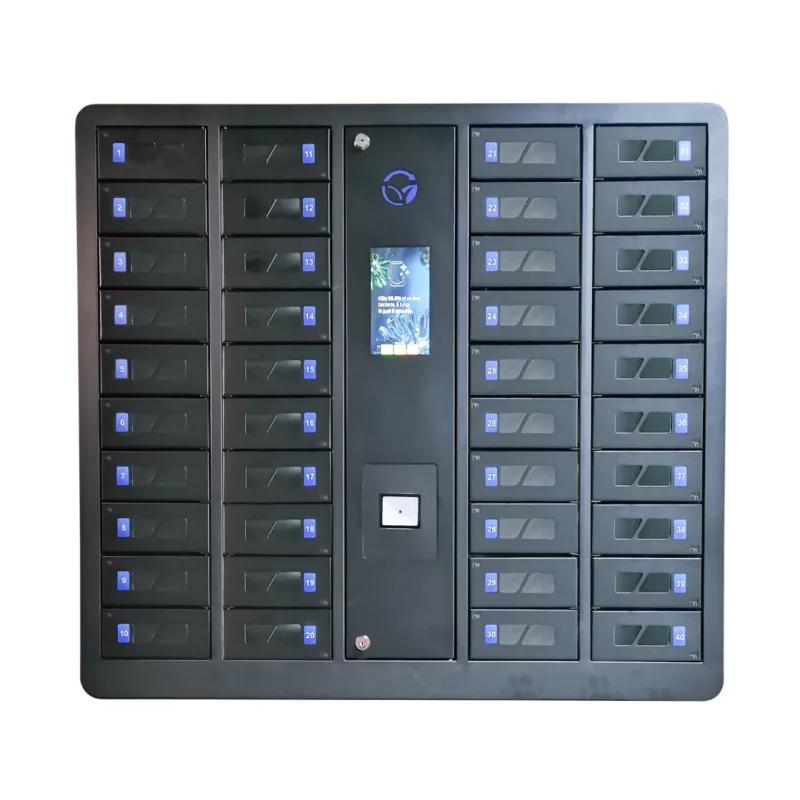
smart phone charging locker
SecureTech Smart Phone Charging Lockers
A scalable SecureTech phone charging locker line for high-traffic spaces, student programs, and staff device storage.
PROTOTYPE DEVICE MANAGEMENT
Secure check-in/check-out lockers for prototype phones, QA hardware, engineering samples, and shared test devices. Track who took each device, which serial number moved, when it is due back, and where it was returned.
BUYER NEED
Prototype device programs need more than a charging cabinet. Engineering and QA teams need confidential storage, controlled employee access, serial-number verification, return tracking, and a reliable audit trail.
Smart lockers can be configured for high-density smartphone-sized cubbies, solid doors, USB-C charging, badge authentication, barcode or QR scanning, LED status indicators, offline operation, and automated alerts.
CHECK-IN / CHECK-OUT WORKFLOW
A prototype device locker workflow should verify both user identity and the exact device asset, then update status across the locker network.
Employee scans a badge, NFC wallet credential, PIN, or other approved identity method.
User scans the device QR code, barcode, serial label, or asset tag for verification.
The system opens the approved cubby and records the user, device, bay, and timestamp.
Dashboards and alerts show checked-out, overdue, damaged, missing, charging, and ready devices.
Solid-door smart lockers help protect prototype phones, R&D samples, QA devices, and unreleased hardware from casual visibility.
Badge access identifies the user; QR or barcode scanning identifies the exact device so the system can track serial-level movement.
Cloud, on-premise, and offline-first deployment planning supports corporate security requirements and locked-down engineering networks.
Return windows, alerts, and exception reporting help teams find late, missing, damaged, or misplaced prototype devices faster.
RECOMMENDED MODELS
Prototype teams usually need high-density small bays, solid doors, device charging, badge access, and software customization. These models are good starting points for a 64, 128, or 256+ bay deployment.
smart phone charging locker
A scalable SecureTech phone charging locker line for high-traffic spaces, student programs, and staff device storage.
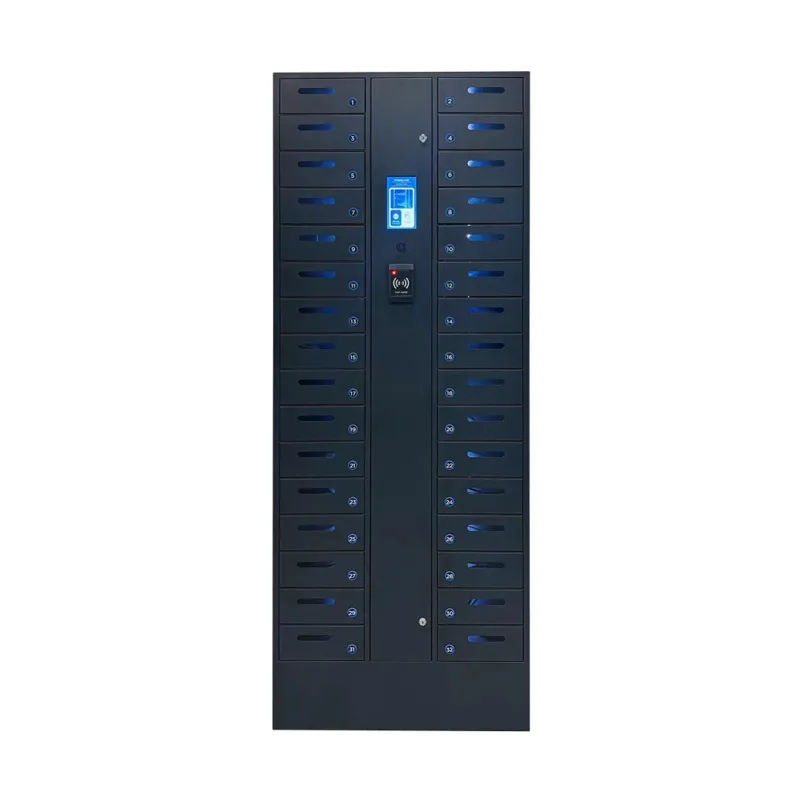
32 bay phone charging locker
A 32 bay phone charging locker for facilities that need high-capacity secure phone storage in a compact format.
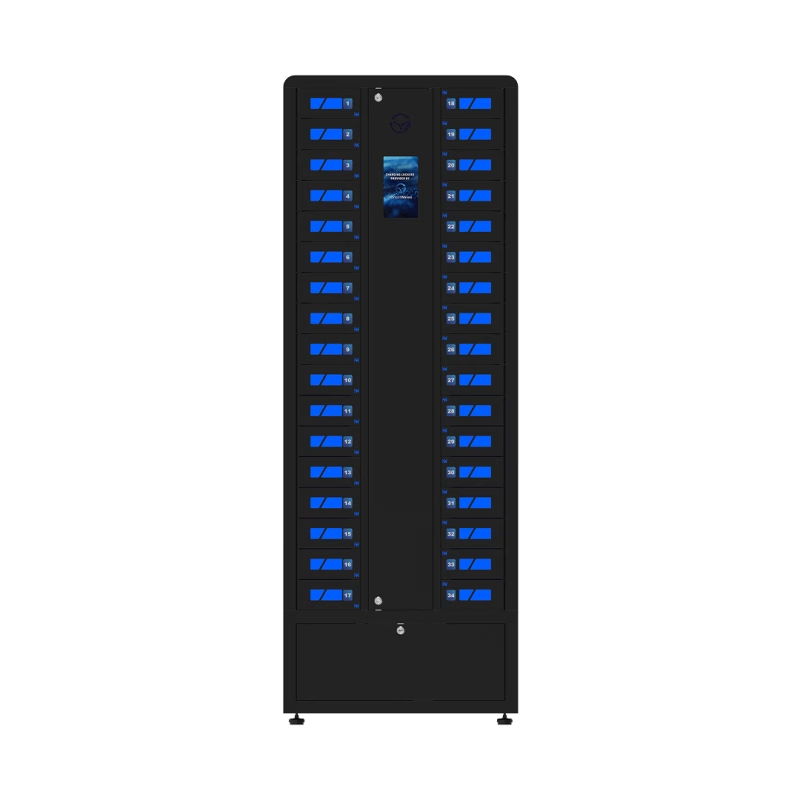
SmartLocker 34 charging locker
A slim 34 bay phone charging locker for high-capacity phone storage in offices, schools, venues, and staff spaces.
TECHNICAL FOLLOW-UP
Share your bay count, cubby dimensions, door privacy requirements, charging needs, badge system, scanner workflow, network limits, and timeline. The team can review drawings, scanner options, and software workflow requirements before quoting.
FAQ
Yes. Smart lockers can support employee badge workflows using RFID, NFC, PIN, QR, or other configured credentials so access can be tied to a specific user and department.
Yes. Device verification workflows can require users to scan a QR code, barcode, asset tag, or serial label during check-in and check-out to confirm exactly which device is moving.
Yes. Small-device lockers can be configured with low-power USB-C charging in each bay so smartphones, test phones, and compact engineering devices stay ready for use.
Yes. For confidential prototypes and unreleased devices, solid-door configurations can be used so stored devices are not visible from outside the locker.
Multi-locker workflows can be configured so users check out a device from one locker and return it to another, with the inventory system syncing device status across the deployment.
Deployments can be planned for cloud, on-premise, restricted-network, or offline-first environments. Offline workflows can sync transactions when network access is available.
Yes. Return-time rules can trigger automated alerts when a prototype device is overdue, missing, damaged, or not returned to an approved location.